Thinking / Consumer decision-making
Why shoppers hesitate at the last click
A conversion problem is often a trust problem wearing a different label.
Cognexa team / 6 min read / Sample article
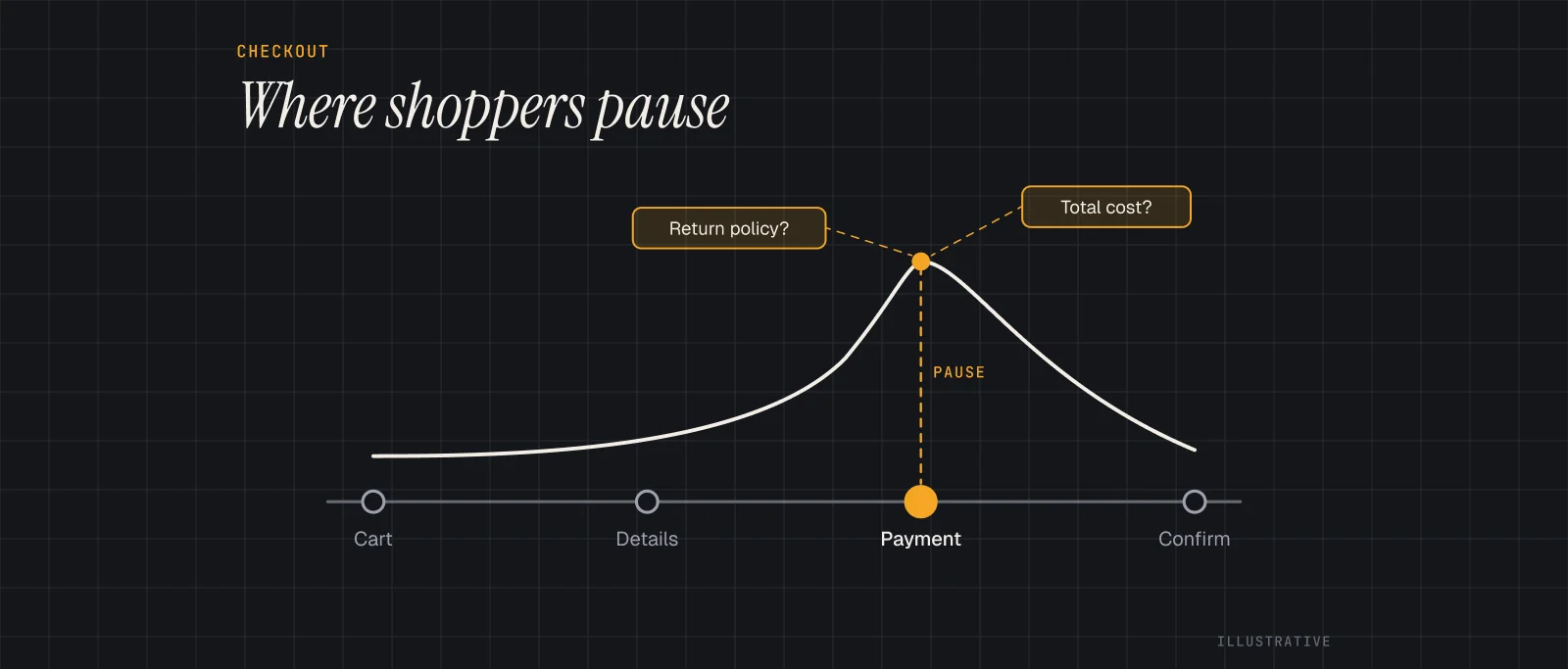
A shopper who reaches checkout has already decided something. What happens next is rarely about the product. It is about whether the last step feels safe, fair and small.
The brief says conversion. The behaviour says doubt.
When a store asks why checkout completion is low, the usual answer is a shorter form or a faster page. Sometimes that is right. Often the hesitation sits earlier: an unexpected cost, a return policy that is hard to find, a payment step that looks unfamiliar.
A conversion problem is often a trust problem wearing a different label.
Look at the moment
We start by watching where people slow down, go back or leave, and then ask what they were weighing at that moment. Effort, risk and uncertainty each leave different traces.
What we look for
- • Where people pause.
- • What they check before paying.
- • What they go back to read.
A smaller, safer last step
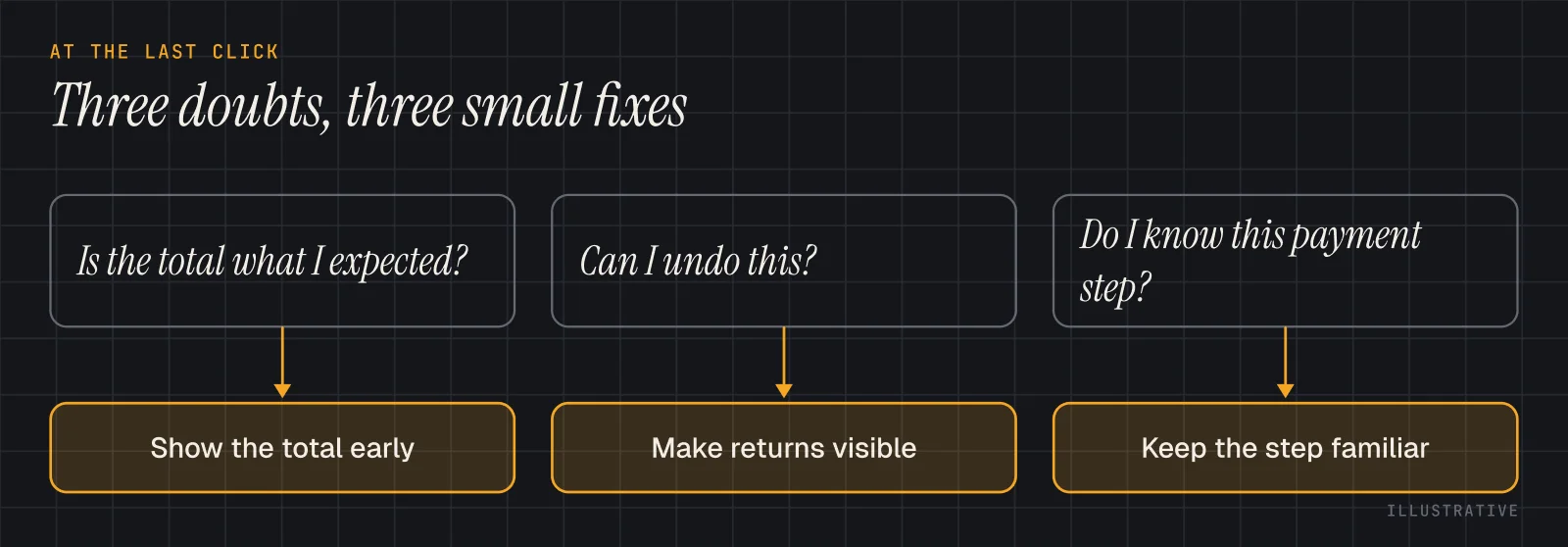
Once the doubt is named, the fix is usually modest: say the total early, make returns visible, and keep the payment step familiar. The aim is a decision that feels safe.
Written by the Cognexa team. Sample article text, to be replaced.