Thinking / Behavioural Science
Loss aversion on a pricing page
Why the same price reads differently depending on what sits beside it.
Cognexa team / 5 min read / 16 October 2026
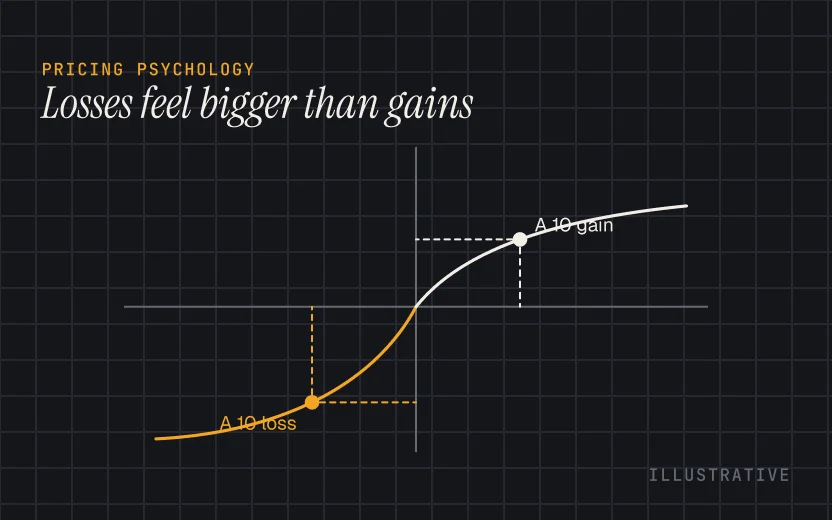
People weigh losses more heavily than equal gains. On a pricing page, that means the same number can feel fair or painful depending on how it is framed and what appears next to it.
Frame the price against the cost of waiting
A price shown alone invites the question of whether it is worth it. Shown beside what the problem already costs, it becomes a comparison. The frame has to be true and easy to check.
The same price feels different next to a different reference.
Show what the plan protects
Plans described by features read as a list of costs. Plans described by what they protect, such as time, revenue or peace of mind, are easier to weigh. We test both framings with the buyers who decide.
Framing checks
- • What sits next to the price?
- • Is the cost of waiting visible?
- • Does each tier say what it protects?
Use the reference honestly
Reference points guide choice, so they must be real. An inflated anchor may win a click and lose the relationship. Use comparisons a buyer can verify for themselves.
Written by Cognexa team. Sample article text, to be replaced.